
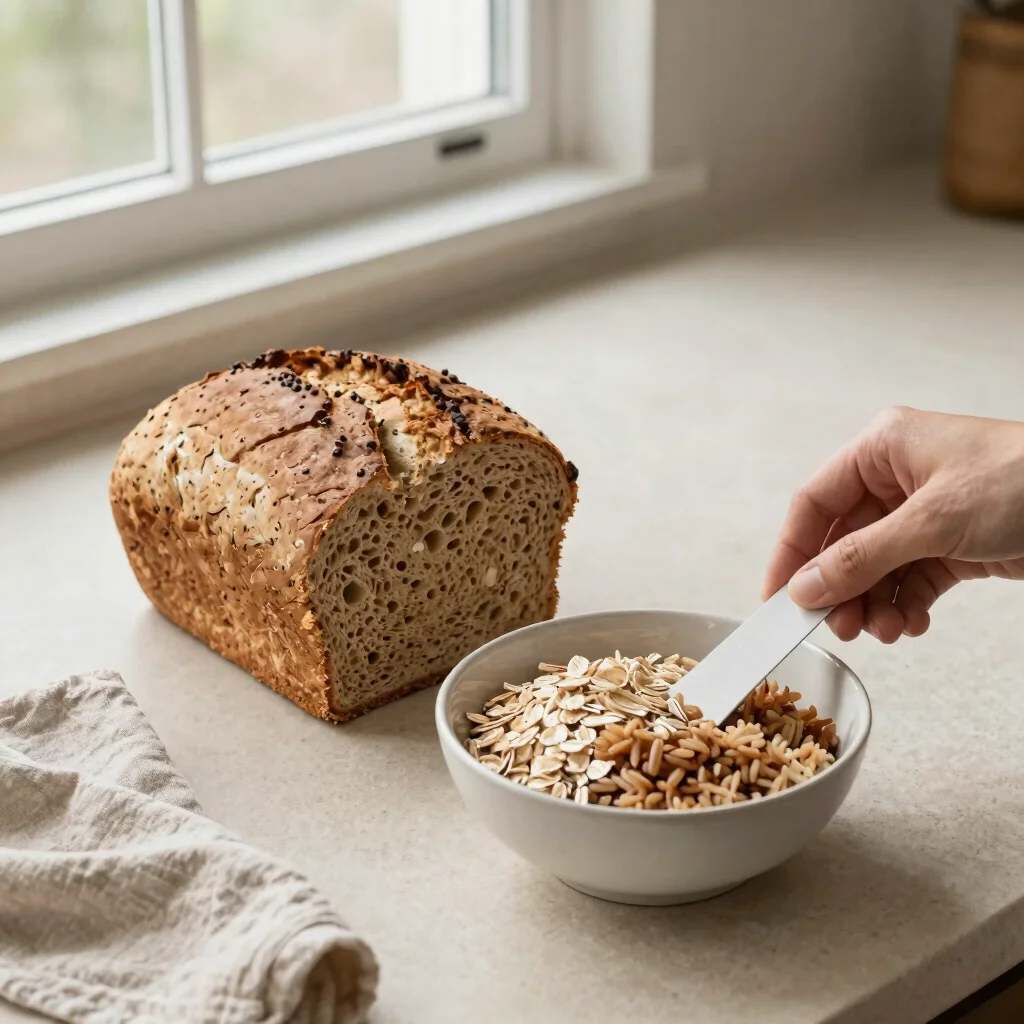
At the grocery store, two loaves can look equally hearty while their ingredient lists tell different stories. Color and words like “multigrain” do not necessarily mean a bread is made mostly from whole grains. Looking for the word “whole” near the start of the ingredients is a more useful first check.
Read Past the Front
Ingredients are generally listed by weight, so a whole grain listed near the beginning gives you a helpful clue about what makes up the loaf. Terms such as “whole wheat flour” identify a whole grain ingredient; “wheat flour” alone does not say the same thing. If you want a quick comparison, check the ingredient lists on two breads you might actually buy.
Look Beyond Bread
Oats, brown rice, barley, and popcorn are familiar whole-grain options, each with a different texture and place at the table. Oats work for breakfast or baking, while cooked barley can make a soup more substantial and brown rice can take the place of white rice in a bowl. The best choice is often the one you enjoy enough to use again.
Choose for Your Routine
Convenience counts: quick oats and microwaveable brown rice can be useful options when time is short. You do not have to replace every grain you eat to explore whole grains; try one substitution in a meal you already make. A label check and one new pantry staple are a practical place to begin.