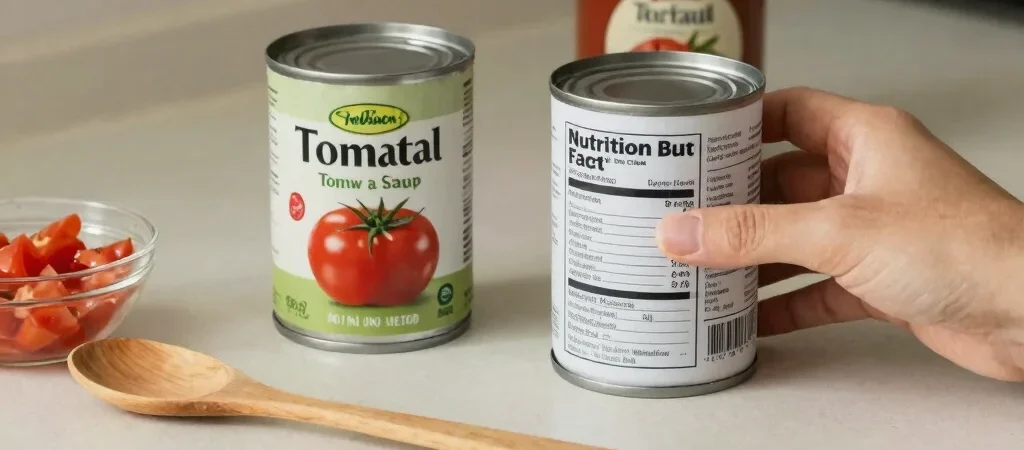
Sodium is easy to overlook because it shows up in foods that do not necessarily taste especially salty, including bread, sauces, and packaged soups. When comparing two similar products, the Nutrition Facts label gives you a clearer basis than taste or front-of-package wording alone. It is a tool for understanding a food, not a verdict on whether you should eat it.
Compare Similar Products
Look at the sodium amount per serving on the Nutrition Facts label, and check the serving size before comparing products. A soup listing a smaller serving may appear lower in sodium than another, even if you would normally eat more than that amount. Comparing two versions of the same food keeps the choice straightforward.
Consider the Whole Meal
The ingredients around a packaged food can change how the meal comes together. For example, if canned beans are part of a taco night, you might rinse them and add fresh tomato, cabbage, or avocado rather than relying on several salty toppings at once. The point is not to make every meal low in sodium; it is to notice where choices can add up.
Let Preference Lead
If you want to adjust your usual grocery choices, try comparing two brands or versions the next time you shop and pick the one that fits your taste and budget. A single label check is more useful than trying to memorize every number in the aisle. People with specific health needs can ask a qualified health professional for guidance tailored to them.