The shoulders are one of the most mobile and complex joints in the human body. They allow us to lift, push, pull, reach, and rotate our arms in almost every direction. Because of this wide range of motion, the shoulders also become vulnerable to stiffness, weakness, and injury—especially when we sit for long hours, train incorrectly, or skip mobility work.
Improving shoulder mobility is essential for pain-free movement, better posture, and strong performance in both daily life and workouts.
What Is Shoulder Mobility?
Shoulder mobility refers to how freely and smoothly the shoulder joint can move through its full range of motion while staying stable and strong.
Good mobility depends on:
- Flexible muscles around the shoulder
- Strong rotator cuff muscles
- Proper scapular (shoulder blade) positioning
- Healthy joint structure and control
The shoulder complex includes the shoulder joint, shoulder blade (scapula), collarbone, and upper back—so mobility means all these areas work together.
Why Shoulder Mobility Is Important
- Reduces shoulder, neck, and upper back pain
- Improves posture, especially for people who sit or use screens a lot
- Enhances strength and performance in pushing, pulling, lifting, and overhead exercises
- Prevents injuries such as impingement, rotator cuff strain, and frozen shoulder
- Increases daily movement quality, making tasks like reaching high shelves or carrying bags easier
Common Causes of Poor Shoulder Mobility
- Sitting with rounded shoulders
- Weak upper back muscles
- Tight chest and front shoulder muscles
- Lack of overhead movements
- Overtraining chest/arms without balancing the back
- Previous injuries or poor movement technique
Signs You Need Shoulder Mobility Work
- Difficulty lifting arms overhead
- Pain during pushing or pulling movements
- Rounded shoulders or forward head posture
- Tightness in chest or upper back
- Clicking or stiffness when rotating arms
- Weak or unstable feeling during overhead exercises
Best Shoulder Mobility Exercises
1. Shoulder CARs (Controlled Articular Rotations)
Improves joint control and full-range movement
Reps: 3–5 slow circles per arm
2. Wall Slides
Targets posture, shoulder blade movement, and overhead range
Reps: 10
3. Sleeper Stretch
Increases internal rotation and reduces shoulder tightness
Hold: 45 seconds each side
4. PVC or Broomstick Pass-Throughs
Opens chest and improves overhead flexibility
Reps: 10–12
5. Scapular Retractions
Strengthens upper back and stabilizes shoulders
Reps: 12–15
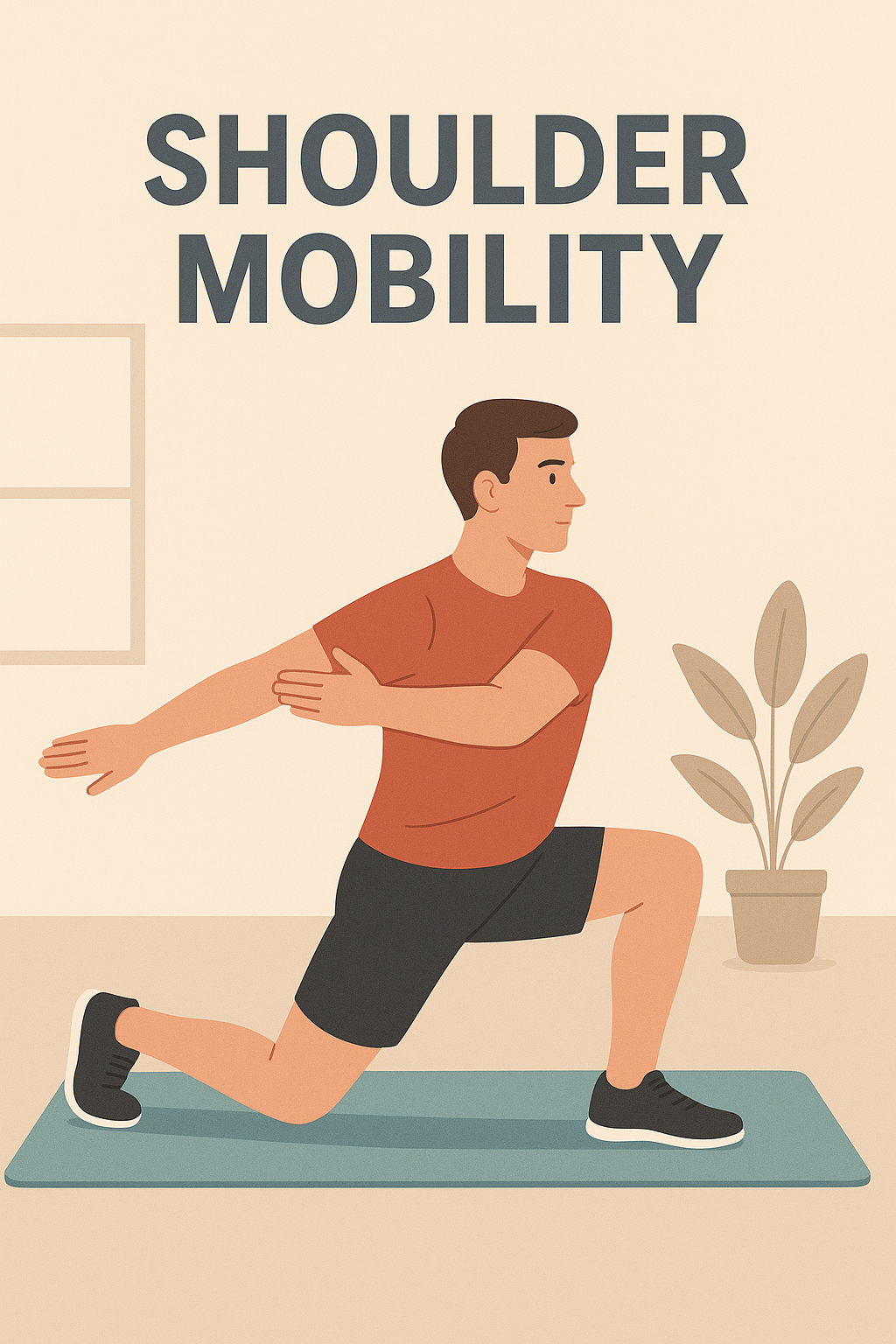
6. Thread the Needle Stretch
Improves thoracic spine and shoulder rotation
Hold: 30–45 sec each side
7. Doorway Chest Stretch
Releases tight chest muscles that restrict mobility
Hold: 30 sec
10-Minute Shoulder Mobility Routine
You can do this every day or 4–5 times per week:
- Shoulder CARs – 3 reps/side
- Wall slides – 10 reps
- Broomstick pass-throughs – 10 reps
- Thread the needle – 45 sec/side
- Doorway chest stretch – 30 sec
Consistent practice will noticeably improve your shoulder movement within weeks.
Tips for Better Shoulder Mobility
- Keep your chest open and avoid slouching
- Strengthen your rotator cuff and upper back
- Do mobility work before upper-body workouts
- Avoid heavy lifting with poor form
- Combine mobility with flexibility and stability
Conclusion
Shoulder mobility is essential for maintaining healthy, pain-free, and strong upper-body movement. Whether you are an athlete, gym-goer, office worker, or someone experiencing stiffness, improving shoulder mobility can transform your posture, reduce pain, and boost performance.