Introduction
Running is one of the most effective and accessible forms of cardiovascular exercise. Whether you’re jogging through a park, sprinting on a track, or training for a marathon, running strengthens the heart, improves lung capacity, and boosts overall health. It requires no special equipment—just a good pair of shoes and the motivation to move.
How Running Improves Cardiovascular Fitness
Running elevates your heart rate and challenges your circulatory and respiratory systems. Here’s how it helps:
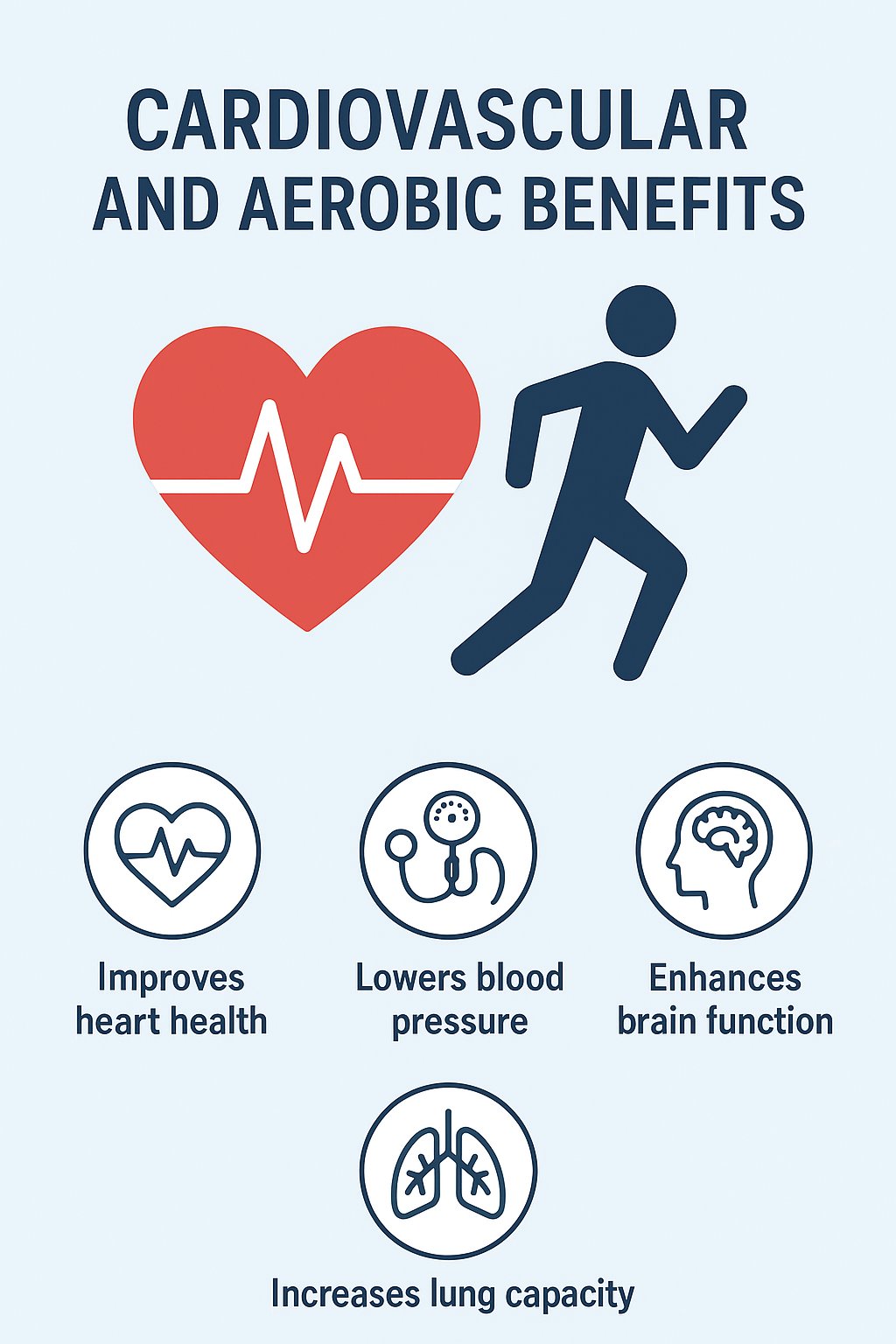
- Strengthens the Heart: Regular running trains your heart to pump blood more efficiently, reducing the workload on your heart at rest.
- Improves Circulation: Enhances blood flow and oxygen delivery to muscles and organs.
- Lowers Blood Pressure and Cholesterol: Helps reduce LDL (“bad”) cholesterol and increase HDL (“good”) cholesterol.
- Boosts Lung Function: Improves breathing efficiency and oxygen exchange.
Types of Running Workouts
Different running styles offer unique benefits:
- Steady-State Running
- Moderate pace for a sustained time (e.g., 30 minutes to 1 hour)
- Great for building aerobic endurance
- Interval Training
- Alternating between high-intensity sprints and recovery periods
- Improves cardiovascular efficiency and burns fat
- Tempo Runs
- Running at a “comfortably hard” pace for 20–40 minutes
- Builds speed and stamina
- Long Runs
- Extended distance runs to develop endurance and mental strength
- Ideal for marathon or distance training
Health Benefits of Running
- Weight Control: Burns more calories per minute than most other exercises.
- Mental Clarity: Releases endorphins (“runner’s high”) that help reduce stress and anxiety.
- Better Sleep: Improves sleep quality and reduces insomnia.
- Stronger Bones and Muscles: High-impact activity that increases bone density and leg strength.
Tips for Safe and Effective Running
- Warm Up and Cool Down: Prevent injuries and help the body recover.
- Wear Proper Shoes: Invest in running shoes that support your gait and foot type.
- Hydrate and Fuel Properly: Especially for runs over 30 minutes.
- Listen to Your Body: Avoid overtraining and allow rest days.
- Use Proper Form: Keep posture upright, arms relaxed, and land softly on midfoot.
Running for All Fitness Levels
- Beginners: Start with a run/walk program (e.g., Couch to 5K).
- Intermediate Runners: Focus on increasing distance and speed.
- Advanced Runners: Train for events, add hill repeats, or improve race times.
Conclusion
Running is a versatile, powerful, and time-efficient way to boost cardiovascular fitness. Whether you’re running for health, stress relief, or competition, every step contributes to a stronger heart and a healthier life. Lace up your shoes, hit the road or trail, and start reaping the lifelong benefits of running.