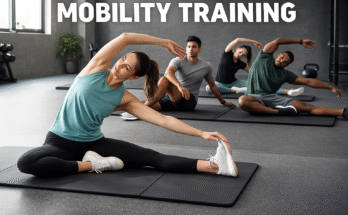
Healthy hips are essential for almost every movement we perform—walking, sitting, bending, lifting, running, and even maintaining good posture. Yet, due to long hours of sitting and lack of movement variety, most people experience tight hips, reduced mobility, and discomfort.
Improving hip mobility not only reduces pain but also enhances strength, flexibility, and overall movement efficiency.
What Is Hip Mobility?
Hip mobility refers to the ability of the hip joint to move freely through its full range of motion with proper control and stability.
It includes:
- Flexion (bringing knees to chest)
- Extension (moving leg backward)
- Rotation (internal and external)
- Abduction and adduction (side-to-side movement)
Good hip mobility requires flexible muscles, strong stabilizers, and well-functioning joints.
Why Hip Mobility Is Important
- Reduces lower back pain – Tight hips force the lower back to compensate.
- Improves posture – Especially for people who sit for long hours.
- Enhances athletic performance – Useful for running, jumping, squatting, and lifting.
- Prevents injuries – Stable and mobile hips protect the knees and spine.
- Boosts daily movement – Makes walking, sitting, standing, and bending easier.
Common Causes of Poor Hip Mobility
- Long hours of sitting
- Weak glutes and hip stabilizers
- Lack of rotational movements
- Tight hip flexors and hamstrings
- Imbalanced workouts (too much strength, no mobility)
- Previous injuries or poor posture
Signs You Need Hip Mobility Training
- Stiffness when getting up from a chair
- Difficulty squatting deeply
- Lower back pain
- Tight hip flexors (front of the hips)
- Knees collapsing inward during exercises
- Limited range of motion in one or both hips
Best Hip Mobility Exercises
1. 90/90 Hip Rotation
- Improves internal & external rotation
- Great for beginners
Hold: 30–60 sec each side
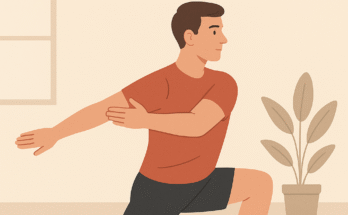
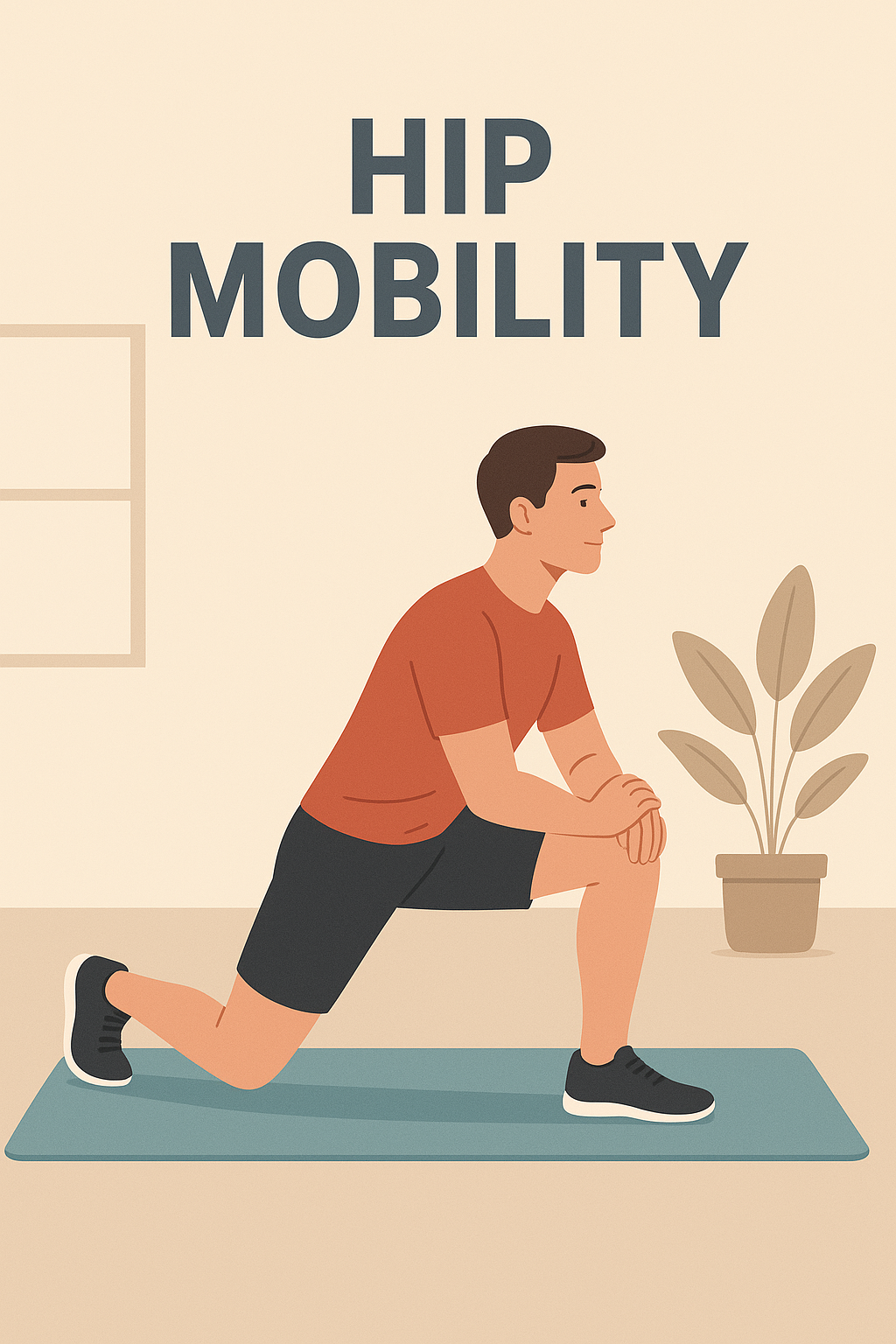
2. Lizard Stretch with Reach
- Opens hip flexors and groin
- Adds thoracic mobility
Hold: 45 sec each side
3. Hip CARs (Controlled Articular Rotations)
- Strengthens the joint at all angles
- Improves control
Reps: 3–5 slow reps each side
4. Pigeon Pose
- Deep stretch for glutes and piriformis
Hold: 1 minute each side
5. Deep Squat Hold
- Improves hip flexion and posture
Hold: 30–60 seconds
6. Butterfly Stretch
- Targets inner thighs and groin
Hold: 45 seconds
7. Glute Bridge
- Strengthens glutes to support mobility
Reps: 12–15
Hip Mobility Routine (10 Minutes)
Do this daily or 4–5 days a week:
- Hip CARs – 3 reps/side
- 90/90 transitions – 10 reps
- Lizard stretch – 1 min/side
- Deep squat hold – 45 sec
- Glute bridges – 15 reps
In just 2–4 weeks, you’ll notice smoother movement and reduced tightness.
Tips for Better Hip Mobility
- Move frequently—avoid sitting for long hours.
- Train mobility before strength workouts.
- Focus on slow, controlled movements.
- Strengthen glutes and core along with mobility work.
- Stay consistent—small daily work is more effective than long, irregular sessions.
Conclusion
Hip mobility is a crucial yet often ignored part of fitness. By including simple, consistent hip mobility exercises in your daily routine, you can reduce pain, move more freely, improve posture, and boost performance in both daily life and sports.