Introduction
The core is much more than just “abs.” It includes your abdominals, lower back, hips, and even muscles around your spine. A strong core is essential for balance, posture, movement control, and injury prevention. Whether you’re lifting weights, playing sports, or simply picking something off the floor, your core is at the center of it all.
Why Core Strength Matters
✅ Improved Posture
Strong core muscles help you stand and sit upright, reducing slouching and back pain.
✅ Better Balance and Stability
Your core keeps you steady during dynamic and static movements, making it crucial for athletic and everyday tasks.
✅ Enhanced Athletic Performance
Core strength boosts power, agility, and coordination in sports like running, swimming, and cycling.
✅ Injury Prevention
A strong core supports your spine and reduces the risk of injuries to your lower back and hips.
✅ Functional Movement Support
Everyday actions—twisting, lifting, bending, reaching—rely on core strength and stability.
Core Muscle Groups Involved
Rectus abdominis: “Six-pack” muscles (front of the abdomen)
Obliques: Side abs (internal and external)
Transverse abdominis: Deep core muscles that stabilize the spine
Erector spinae: Lower back muscles
Multifidus: Small spinal stabilizers
Pelvic floor muscles and diaphragm
Best Core Exercises (No Equipment)
These exercises target multiple areas of the core and are great for home or gym workouts.
🔹 1. Plank (Forearm or Straight-Arm)
How to: Hold a push-up position with tight abs and straight back.
Time goal: Start with 20–30 seconds and build up.
Works: Entire core, especially transverse abdominis
🔹 2. Dead Bug
How to: Lie on your back, arms and legs in the air. Extend opposite arm and leg while keeping your core tight.
Works: Deep core stabilizers
🔹 3. Bicycle Crunch
How to: Alternate elbow to opposite knee in a crunching motion.
Works: Obliques and rectus abdominis
🔹 4. Leg Raises
How to: Lie on your back, hands under hips, raise legs to 90° and lower slowly without touching the floor.
Works: Lower abs
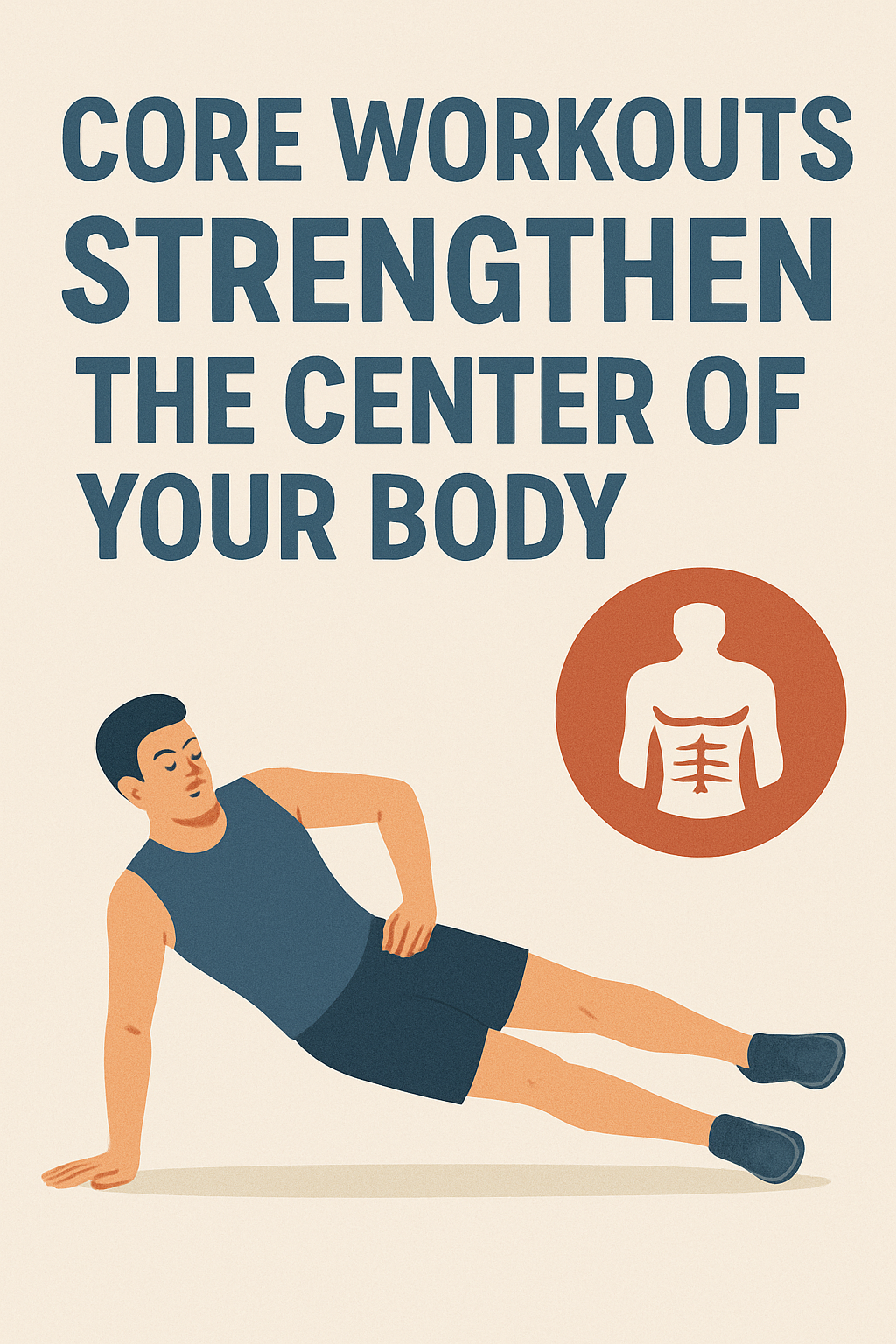
🔹 5. Side Plank
How to: Balance on one forearm and the side of your foot, keeping your body in a straight line.
Works: Obliques, glutes, and shoulder stabilizers
🔹 6. Bird-Dog
How to: From all fours, extend opposite arm and leg. Keep hips level.
Works: Core, glutes, and lower back
Optional Equipment-Based Core Exercises
If you have gym access or home gear, try:
Russian Twists (with weight)
Cable Woodchoppers
Ab Wheel Rollouts
Hanging Leg Raises
Medicine Ball Slams
Sample Beginner Core Routine (No Equipment)
Exercise Duration/Reps Sets
Plank 30 sec 3
Dead Bug 10–12 reps 2–3
Side Plank 20 sec/side 2–3
Leg Raises 10–12 reps 3
Bird-Dog 10 reps/side 2–3
🕒 Do this 3–4 times a week, and you’ll notice stronger core control in 2–4 weeks.
Tips for Effective Core Training
🔁 Engage your core: Focus on tightening the muscles as if bracing for a punch.
🚫 Avoid rushing: Control matters more than speed.
💧 Breathe properly: Don’t hold your breath; exhale on effort.
🧱 Progress gradually: Increase difficulty by adding time, reps, or advanced variations.
Conclusion
Core workouts are vital for building a strong, functional body. They go far beyond just getting visible abs—they help you move better, lift safer, and reduce pain. Whether you’re a beginner or an athlete, core training should be part of your weekly fitness routine.