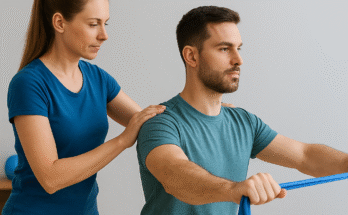
Post-surgery exercises are gentle, structured movements designed to help patients recover safely after an operation. They focus on restoring mobility, rebuilding strength, improving circulation, and reducing the risk of complications.
These exercises are a critical part of rehabilitation and should always be guided by a physiotherapist or healthcare professional to ensure safety and effectiveness.
What Are Post-Surgery Exercises?
Post-surgery exercises are tailored movements that:
- Restore range of motion in joints and muscles
- Improve muscle strength weakened during recovery
- Promote circulation to prevent blood clots and swelling
- Reduce stiffness and pain
- Support return to daily activities and independence
These exercises vary depending on the type of surgery, age, fitness level, and individual recovery goals.
Why Post-Surgery Exercises Are Important
- Accelerates Recovery – Helps tissues heal faster and safely.
- Prevents Complications – Reduces risk of blood clots, stiffness, and muscle atrophy.
- Restores Function – Rebuilds strength and flexibility needed for daily activities.
- Improves Circulation – Promotes oxygen and nutrient delivery to tissues.
- Enhances Mental Well-Being – Physical activity boosts mood and confidence during recovery.
Common Post-Surgery Exercises
1. Range-of-Motion Exercises
- Gentle movement to restore joint flexibility
- Examples: ankle pumps, wrist circles, shoulder pendulum swings
2. Strengthening Exercises
- Rebuilds muscles weakened by surgery or inactivity
- Examples: leg raises, seated marches, resistance band exercises
3. Breathing & Core Exercises
- Improves lung function and core stability
- Examples: diaphragmatic breathing, seated belly contractions
4. Balance & Functional Exercises
- Supports safe movement and daily activity
- Examples: standing weight shifts, heel-to-toe walking
5. Flexibility & Stretching
- Prevents stiffness and improves posture
- Examples: gentle hamstring stretches, calf stretches, chest openers
Sample Post-Surgery Exercise Routine
Warm-Up (5 minutes)
- Deep breathing
- Gentle shoulder and ankle rotations
Mobility & Flexibility (10 minutes)
- Ankle pumps – 10–15 reps
- Shoulder pendulum swings – 10 reps each side
- Seated hamstring stretch – 20–30 seconds per leg
Strength & Stability (10–15 minutes)
- Seated marches – 2×10 per leg
- Glute squeezes – 2×10
- Wall push-ups – 2×10
- Heel raises – 2×10
Functional Movement & Balance (5 minutes)
- Weight shifting side-to-side – 2×10
- Mini squats with chair support – 2×8–10
Cool Down & Recovery (5 minutes)
- Deep breathing
- Gentle full-body stretches
Tips for Safe Post-Surgery Exercise
- Always follow your doctor’s or physiotherapist’s advice
- Avoid exercises that cause pain, swelling, or discomfort
- Start slowly and progress gradually
- Maintain proper posture and form
- Combine exercises with hydration, nutrition, and adequate rest
- Monitor progress and report any unusual symptoms to your healthcare provider
Conclusion
Post-surgery exercises are an essential component of recovery, helping patients regain strength, flexibility, and independence while reducing complications. With careful guidance, gradual progression, and consistency, these exercises enable a safe and effective return to daily activities and overall well-being.