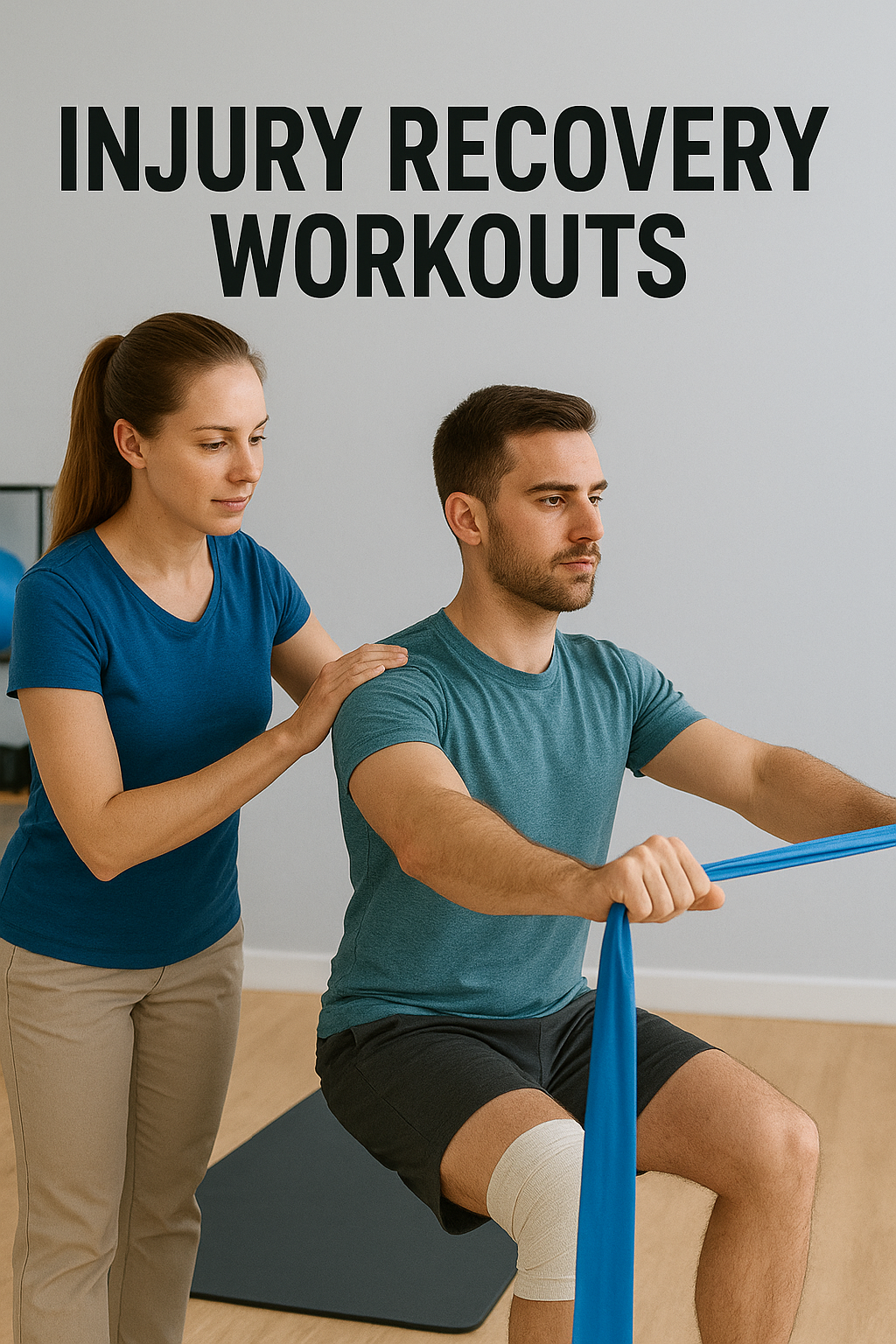
Injury recovery workouts are specialized exercises designed to help the body heal, restore mobility, rebuild strength, and prevent further injury. Unlike regular workouts, these exercises are gentle, targeted, and progressive, making them suitable for people recovering from sports injuries, surgeries, or chronic pain conditions.
Proper injury recovery workouts are crucial for regaining functional movement, returning to daily activities, and minimizing the risk of re-injury.
What Are Injury Recovery Workouts?
Injury recovery workouts focus on:
- Regaining strength in affected muscles
- Restoring joint mobility and flexibility
- Correcting movement patterns and posture
- Improving balance and stability
- Supporting pain management and tissue healing
These workouts are often guided by physiotherapists or certified trainers to ensure safety and effectiveness.
Why Injury Recovery Workouts Are Important
- Speeds Up Healing – Gentle movement increases blood flow, aiding tissue repair.
- Prevents Muscle Atrophy – Maintains muscle strength even during recovery.
- Restores Function – Helps patients regain normal movement patterns for daily life.
- Reduces Risk of Re-Injury – Corrects imbalances and weaknesses that caused the injury.
- Enhances Mental Well-Being – Physical activity boosts confidence and reduces stress.
Types of Injury Recovery Workouts
1. Range-of-Motion Exercises
- Promote joint mobility and prevent stiffness
- Examples: ankle circles, shoulder pendulum swings, wrist rotations
2. Low-Impact Strength Training
- Targets weakened muscles without stressing injured areas
- Examples: resistance band exercises, bodyweight squats, seated rows
3. Core and Stability Work
- Improves balance and support for injured joints
- Examples: planks, bird-dog, glute bridges
4. Flexibility and Stretching
- Reduces muscle tightness and improves posture
- Examples: hamstring stretches, hip openers, gentle yoga poses
5. Cardiovascular Exercise
- Maintains endurance and promotes circulation
- Examples: walking, swimming, stationary cycling
Sample Injury Recovery Routine
Warm-Up (5 minutes)
- Gentle marching in place or light stationary cycling
- Shoulder rolls and neck rotations
Mobility & Flexibility (10 minutes)
- Ankle circles – 10 reps each side
- Cat-cow stretch – 8–10 reps
- Seated hamstring stretch – 20–30 seconds per leg
Strength & Stability (15–20 minutes)
- Glute bridges – 3×10–12
- Wall push-ups – 3×10–12
- Bird-dog – 3×10 each side
- Resistance band rows – 3×12
Balance & Functional Movement (5–10 minutes)
- Single-leg stands – 3×20 seconds per leg
- Heel-to-toe walking – 2×10 steps
Cool Down & Recovery (5 minutes)
- Deep breathing
- Gentle full-body stretch
- Optional foam rolling for tension release
Tips for Safe Injury Recovery Workouts
- Always consult a physiotherapist or healthcare provider before starting
- Focus on slow, controlled movements
- Stop exercises if you experience sharp pain or swelling
- Gradually increase intensity and volume over time
- Incorporate rest and proper nutrition to support healing
- Track progress to monitor improvements and adjust exercises
Conclusion
Injury recovery workouts are a vital tool for restoring strength, mobility, and overall function after injury. By combining targeted mobility, strength, balance, and flexibility exercises, these workouts help individuals return to daily activities, prevent future injuries, and regain confidence. Safe, consistent, and progressive training under professional guidance ensures the best outcomes for long-term health and recovery.