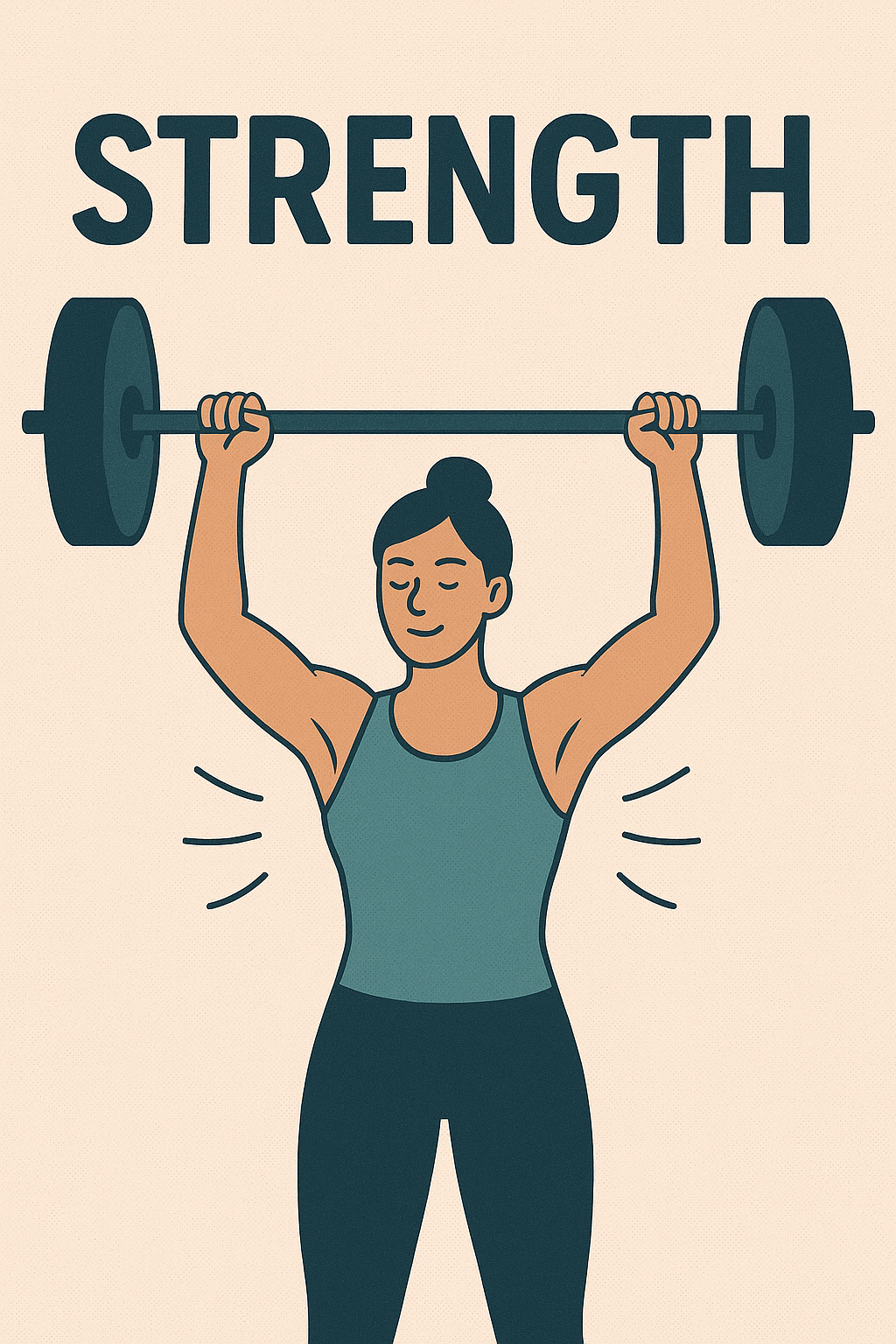
Strength is more than just lifting heavy weights—it is the body’s ability to exert force, resist fatigue, and perform everyday activities efficiently. Developing strength improves physical performance, prevents injuries, and enhances overall health, making it a cornerstone of fitness.
Whether you are an athlete, gym-goer, or someone focused on functional health, building strength is essential for a long, active, and healthy life.
What Is Strength?
Strength is the capacity of muscles to generate force against resistance. It is influenced by:
- Muscle size and quality
- Nervous system efficiency
- Tendon and joint health
- Technique and biomechanics
Strength comes in many forms, including:
- Maximal strength: The heaviest load you can lift once
- Muscular endurance: Ability to perform repeated movements
- Explosive strength: Ability to exert force quickly (e.g., jumping, sprinting)
- Functional strength: Everyday strength for activities like lifting, carrying, and climbing stairs
Why Strength Is Important
- Enhances physical performance – Stronger muscles improve sports, exercise, and daily activities.
- Supports bone and joint health – Resistance training increases bone density and protects joints.
- Boosts metabolism – Muscle tissue burns more calories at rest than fat tissue.
- Prevents injuries – Strong muscles and connective tissues stabilize the body.
- Improves posture and balance – Reduces risk of falls and chronic pain.
- Promotes long-term health – Supports healthy aging and functional independence.
Key Principles of Strength Training
1. Progressive Overload
Gradually increasing resistance or workload forces muscles to adapt and grow stronger.
2. Consistency
Regular strength training, 2–5 times per week depending on goals, is crucial for results.
3. Exercise Variety
Include compound movements (squats, deadlifts, presses) and isolation exercises (bicep curls, tricep extensions) to target different muscles.
4. Proper Technique
Correct form reduces the risk of injury and ensures effective muscle activation.
5. Recovery
Muscles need rest and proper nutrition to repair and grow stronger.
Common Strength Training Exercises
Upper Body
- Bench Press
- Pull-Ups / Chin-Ups
- Rows
- Shoulder Press
- Push-Ups
Lower Body
- Squats
- Deadlifts
- Lunges
- Leg Press
- Calf Raises
Core
- Planks
- Russian Twists
- Hanging Leg Raises
- Ab Rollouts
Full-Body / Functional
- Kettlebell Swings
- Clean and Press
- Farmer’s Carry
- Medicine Ball Slams
Sample Strength Training Routine (3 Days/Week)
Day 1 – Upper Body
- Bench Press – 3×8
- Pull-Ups – 3×6–8
- Shoulder Press – 3×10
- Rows – 3×10
- Plank – 3×45 sec
Day 2 – Lower Body
- Squats – 3×8–10
- Deadlifts – 3×6–8
- Lunges – 3×12 each leg
- Calf Raises – 3×15
- Hanging Leg Raises – 3×12
Day 3 – Full Body
- Kettlebell Swings – 3×15
- Push-Ups – 3×12–15
- Farmer’s Carry – 3×30 sec
- Medicine Ball Slams – 3×12
- Side Plank – 3×30 sec each side
Tips for Building Strength
- Prioritize compound lifts before isolation exercises
- Warm up and stretch to prevent injury
- Maintain proper nutrition with adequate protein for muscle repair
- Track progress to ensure progressive overload
- Be patient—strength gains take time and consistency
Conclusion
Strength is a fundamental component of fitness that improves performance, health, and quality of life. By focusing on proper training, progressive overload, recovery, and nutrition, anyone can develop functional, athletic, and lasting strength. Whether your goal is athletic performance, aesthetics, or overall well-being, strength is the foundation upon which all fitness achievements are built.