Breath is more than just a life-sustaining function—it is a powerful tool to influence your mind, body, and emotional state. Breathwork refers to deliberate breathing techniques designed to improve physical health, mental clarity, emotional balance, and overall well-being.
From ancient practices like pranayama in yoga to modern therapeutic methods, breathwork has become increasingly popular for stress relief, performance enhancement, and holistic health.
What Is Breathwork?
Breathwork involves consciously controlling the rate, depth, and pattern of your breathing to influence the nervous system and mental state.
Key aspects include:
- Deep diaphragmatic breathing
- Rhythmic or patterned breathing
- Breath-holds or controlled exhalations
- Mindful awareness of inhalation and exhalation
By practicing breathwork, you can regulate stress, release tension, and improve energy flow throughout the body.
Benefits of Breathwork
1. Mental Benefits
- Reduces stress and anxiety
- Improves focus, clarity, and emotional regulation
- Enhances mindfulness and presence
2. Physical Benefits
- Lowers heart rate and blood pressure
- Improves lung capacity and oxygenation
- Boosts energy and vitality
- Supports immune function
3. Emotional and Holistic Benefits
- Releases suppressed emotions and tension
- Promotes relaxation and calmness
- Enhances overall well-being
Common Breathwork Techniques
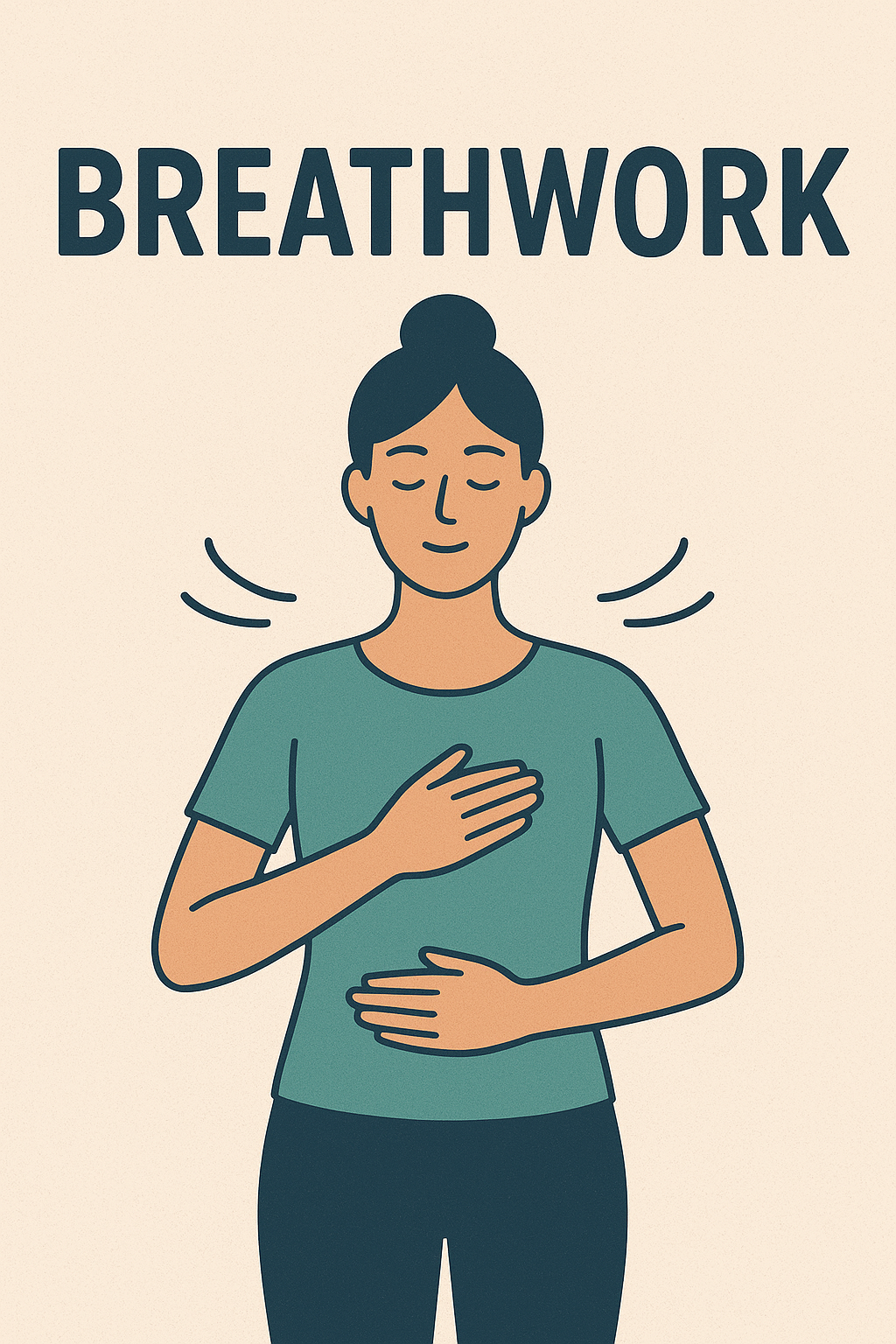
1. Diaphragmatic Breathing (Belly Breathing)
Focus on expanding the diaphragm rather than shallow chest breathing.
Benefits: Relieves stress, improves oxygen flow, supports relaxation.
2. Box Breathing
Inhale → Hold → Exhale → Hold (equal counts, e.g., 4 seconds each)
Benefits: Calms the nervous system, improves focus, reduces anxiety.
3. 4-7-8 Breathing
Inhale for 4 sec → Hold for 7 sec → Exhale for 8 sec
Benefits: Promotes relaxation, helps with sleep and stress management.
4. Alternate Nostril Breathing (Nadi Shodhana)
Inhale through one nostril, exhale through the other, alternating sides.
Benefits: Balances energy, calms the mind, enhances focus.
5. Wim Hof Method
Combines deep breathing cycles with breath retention and cold exposure.
Benefits: Boosts energy, reduces stress, improves immune function.
6. Holotropic or Connected Breathing
Rapid, connected breathing often combined with music or guided sessions.
Benefits: Releases emotional blocks, induces deep relaxation or altered consciousness.
Minute Daily Breathwork Routine
- Diaphragmatic breathing – 1 min
- Box breathing – 2 min (4-4-4-4 counts)
- Alternate nostril breathing – 1 min
- Deep slow exhalation – 1 min (longer exhale than inhale)
This short routine reduces stress, clears the mind, and energizes the body.
How Breathwork Affects the Body and Mind
- Activates the parasympathetic nervous system (rest-and-digest)
- Reduces cortisol (stress hormone)
- Improves oxygen delivery to muscles and organs
- Supports emotional release and mental clarity
- Enhances focus, creativity, and resilience
Tips for Practicing Breathwork
- Find a quiet, comfortable environment
- Sit upright or lie down with a straight spine
- Focus on slow, controlled, and mindful breathing
- Start with 5–10 minutes daily and gradually increase
- Combine with meditation or gentle movement for deeper effects
- Avoid forcing breath—never hyperventilate beyond your comfort level
Conclusion
Breathwork is a simple yet powerful tool for improving mental, physical, and emotional health. With regular practice, you can reduce stress, enhance energy, improve focus, and cultivate a sense of inner calm. Whether used alone or alongside yoga, meditation, or fitness, breathwork is accessible to everyone and can transform your daily life from the inside out.