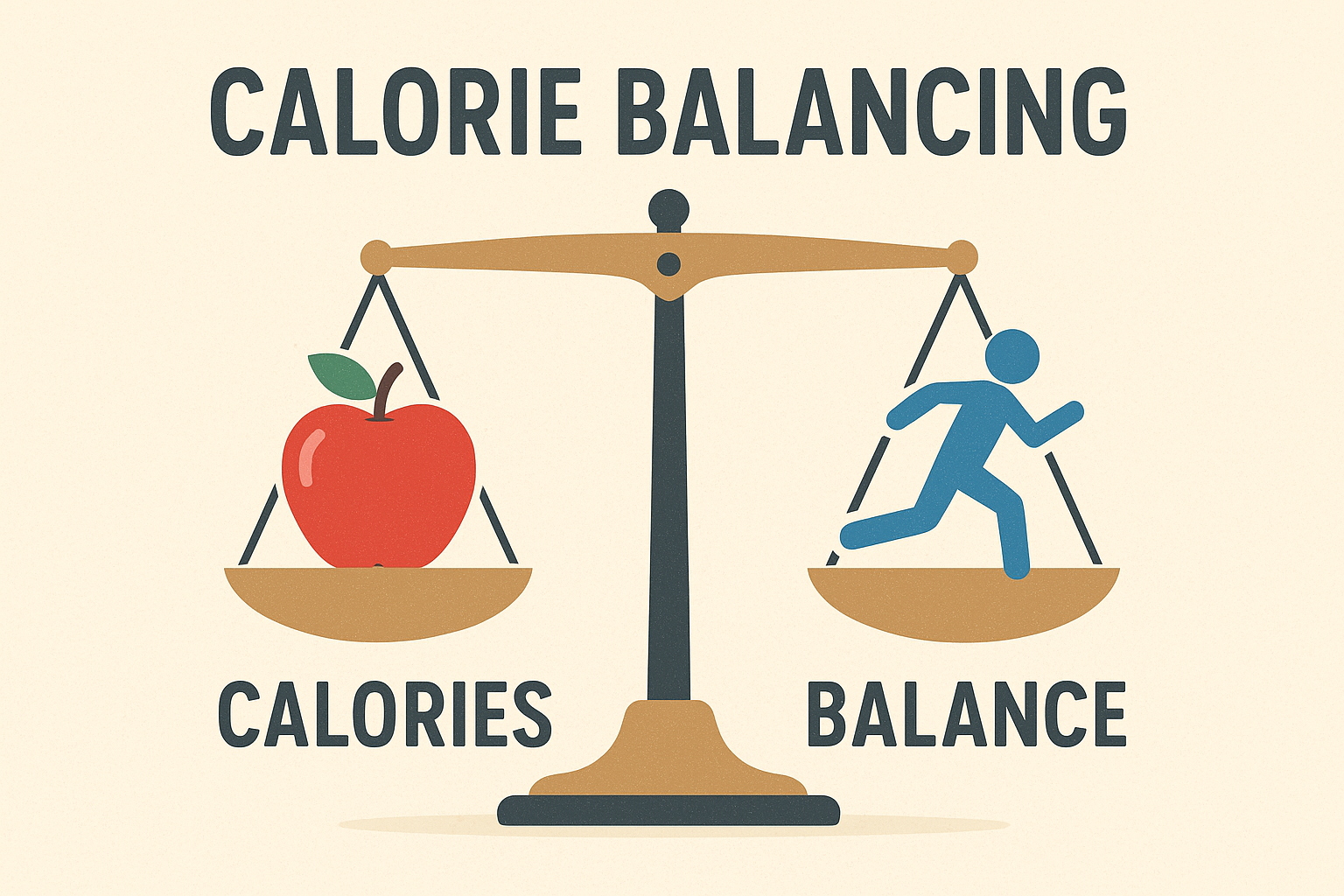
Calorie balancing is the practice of matching the energy you consume from food with the energy your body uses through daily activities, exercise, and basic metabolic functions. It is a fundamental concept for weight management, body composition, and overall health.
Understanding and applying calorie balance can help you lose fat, gain muscle, or maintain your weight in a sustainable and healthy way.
What Is Calorie Balancing?
A calorie is a unit of energy obtained from food and beverages. Your body uses calories to:
- Fuel basic metabolic functions (breathing, circulation, digestion)
- Perform physical activity (walking, exercise, chores)
- Support growth, repair, and cellular functions
Calorie balance occurs when:
- Calories in = Calories out → weight maintenance
- Calories in > Calories out → weight gain
- Calories in < Calories out → weight loss
Balancing calories ensures your body has enough energy for daily life without unwanted fat gain.
Why Calorie Balancing Matters
- Weight Management – Helps maintain, lose, or gain weight in a controlled manner.
- Body Recomposition – Supports fat loss while preserving or building muscle.
- Metabolic Health – Prevents overeating or under-eating, maintaining stable energy levels.
- Long-Term Sustainability – Encourages mindful eating habits instead of extreme dieting.
- Performance & Energy – Ensures enough fuel for workouts, work, and daily activities.
How to Balance Calories Effectively
1. Calculate Your Daily Calorie Needs
- Determine your Basal Metabolic Rate (BMR) – calories needed at rest
- Add calories burned from daily activity and exercise → Total Daily Energy Expenditure (TDEE)
2. Track Calorie Intake
- Monitor portion sizes and food choices
- Use apps or food journals to track daily intake
- Focus on nutrient-dense foods rather than empty calories
3. Adjust for Goals
- Weight Loss: Eat slightly below TDEE (e.g., 10–20% deficit)
- Weight Gain / Muscle Growth: Eat slightly above TDEE (e.g., 10–20% surplus)
- Maintenance: Match calorie intake to TDEE
4. Focus on Nutrient Quality
- Prioritize protein, complex carbs, healthy fats, and fiber
- Include fruits, vegetables, whole grains, lean proteins, and healthy fats
- Avoid excessive processed foods and added sugars
5. Monitor & Adjust
- Track progress weekly with weight, measurements, or body composition
- Adjust calorie intake based on results and goals
- Be patient—changes in weight or composition take time
Tips for Sustainable Calorie Balancing
- Eat protein-rich meals to support muscle growth and satiety
- Include fiber to feel full longer
- Spread meals throughout the day for stable energy
- Combine strength training and cardio for optimal results
- Stay hydrated and prioritize sleep to support metabolism
- Avoid drastic calorie cuts; aim for gradual, sustainable changes
Conclusion
Calorie balancing is a simple yet powerful tool for achieving and maintaining a healthy body weight, improving body composition, and supporting overall wellness. By understanding your energy needs, tracking intake, focusing on nutrient quality, and adjusting based on goals, you can achieve sustainable health, fitness, and performance outcomes without extreme diets or unnecessary stress.